LANGUAGES:  Website in English  Sito in Italiano

/ Home / Old Town /


View on mapLucignano d'Asso
La via di accesso al borgo

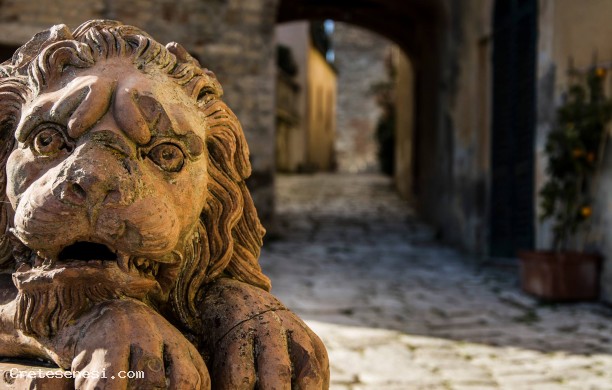
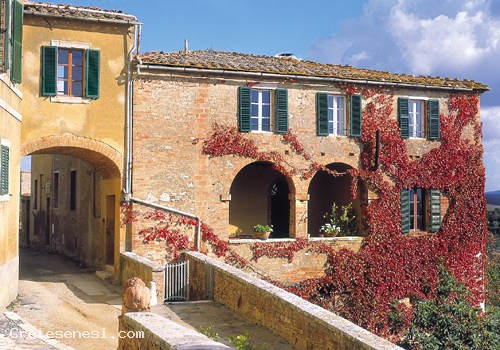
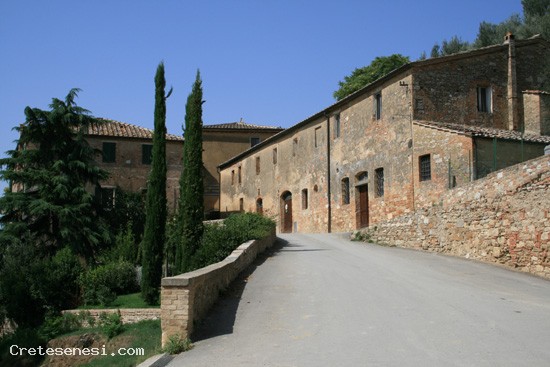
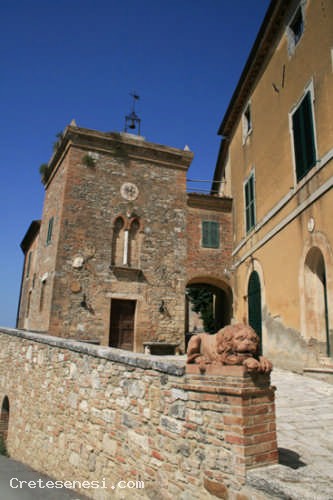
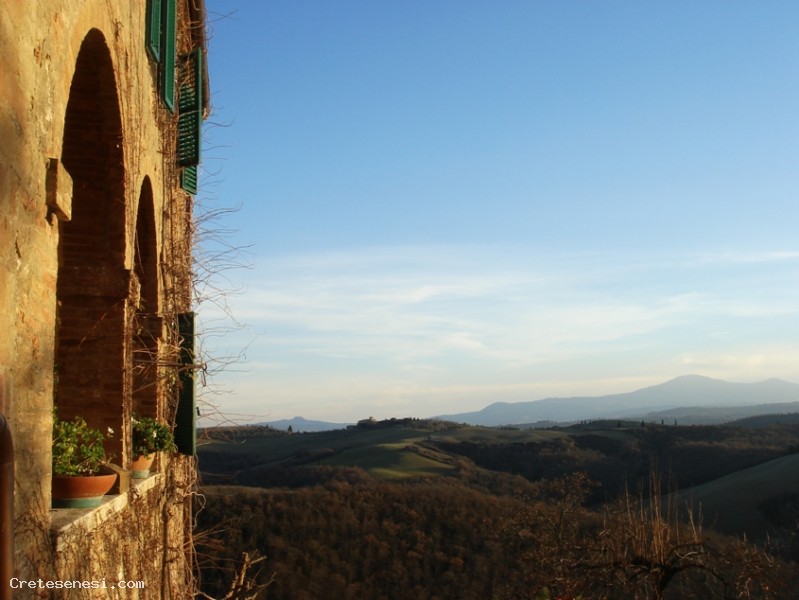
Lucignano d’Asso represents more the big history than the one which is documented by the Annals of the Great Events. The tenuous colours of its walls, an architecture of great beauty and the settlement in an extraordinary natural habitat, still wonderfully untouched, talk about the thousand daily works which during the centuries have shaped the rural life in this southern part of the Tuscany: an agriculture which concentrates more on the quality than on the quantity, and the artisanship of pottery-makers, blacksmiths and stone-dressers. Hidden into the Crete Senesi, the nice village testify how the past, kept with due respect, can live also in the present and be an inspiration for the future too. Staying in Lucignanello Bandini, diving into a landscape of gentle hills, ponted here and there by a solitary cypress, letting us be charmed by the glittering of the olive trees, which are moved by the breeze. It all means to find again the interior peace which comes from the restored contact with activities, of which the rhythms reflect those of the changing of the seasons. Despite the nearness to the main touristic resorts of the central Italy, Lucignano d’Asso has kept not only the aspect but also the atmosphere of an ancient time, often regretted and maybe also idealized. The small village is made up of two lanes and two churches, few houses, an old store, the noble house with the well-kept garden , the ancient fountain. All around, the moving ocean of the Crete, to define the relationship between land and sky, the imposing shape of Mount Amiata, a volcanic source of thermal waters which spring in the near lands. Already inhabited during the Roman time, “Lucignanum Longassum” assumed its final shape in the Middle Ages, becoming part of the sienese countryside and for this reason it was forced to pay an extraordinary tax to face the immense debts, which Siena took upon itself during the war against Florence. In 1318 the castle belonged to the Tolomei, but a document of 1485 says that already in that year Lucignano belonged to the “heirs of Agnolo di Niccolò di Piccolomo Piccolomini”, one of the families, which with their name, marked numerous stages of the social and religious history of Italy. In Lucignano, a history made up by famous characters, identifies itself with a simple way of life. The atmosphere in the village reflects the warmth of those who perceive the time as a continuous flow , which needs respect to express its potential harmony. This sense of equilibrium has also a physical mean , which you can see in the village and the landscape. It is a rare thing today to be at the measure of the man. Nevertheless, in this place it seems natural because it comes directly from the Renaissance concept of Man, who is the centre and the measure of the universe. That the daily life in this happy island it is still based on the idea that an harmonious place has to go with the development of the social civility, we can understand it from the small and big things, in Lucignanello is already clear in the careful restructuring and furnishings of the houses. The articulation of the spaces is due to Paolo Alberto Rossi, teacher of architectonic restoration, who is renowned for his ability in linking the present needs with the heritage of the past. The interior furnishing is a work of Vera Marzot, already famous to the public of the opera, because of her stage costumes. In all the 5 houses of the village and in the independent “Sarageto House”, the two experts have create rooms, of which the spaces and the materials compliment the wonder of the lights, colours and shapes of the outside: the bright shade of the local travertine, the attractive red of the fired –brick , the wood marked by the seasons, mural tempera-decorums the rare artisan ceramics, the hemp, the cloth printed with vivid colours, the cotton weaved with Jacquard motives. In a wider prospect, the same respect for the context and the particular is also present in the near villages of Montalcino and Pienza, both of them clearly visible from Lucignano. Last bulwark of the sienese Republic, after the falling of the city under the Florentines in 1555, Montalcino keeps in its beautiful Civic Museum a wonderful series of paintings and sculptures of the Sienese School of the late Middle Ages and a collection of primitive ceramics of Montalcino of great interest. And if Montalcino shows the signs of the historic happenings of an important period, Pienza is the expression of the perfect far-sightedness of a singular man: Enea Silvio Piccolomini, who became Pope Pio II in 1458 and started the changing of his native land into a jewel of Renaissance architecture. Since then, it was called Pienza, for this reason. While in other places of Tuscany have developed some industries which have contributed to the economy by taking away from the beauty of the landscape, the Crete senesi and the bordering Val d’Orcia have followed their original agricultural vocation. Today, it means food products of great quality, fruit of artisan methods and traditional processes which hand down from father to son. Without a doubt, the most famous of these products are the “Brunello” of Montalcino and the “Vino Nobile” of Montepulciano, those renowned red wines which perfectly go with the tasty dishes , created with the game which abounds in the surroundings: pheasants, quails, wild boars, hares…More and more demanded, abroad too, is the pecorino-cheese, obtained from the milk of the flocks of Pienza’s pastures. In recent times the connoisseurs have shown a particular interest for the extra virgin olive oil which is squeezed cold from the olives cultivated with biological methods on the hills among Lucignano, Montisi, Trequanda and Castelmuzio, where the quality of the land, the dry air and the delicate breeze which makes lighter even the hottest summer, make the chemical process unnecessary. The family Piccolomini Naldi Bandini is rightly proud of its own olive oil’s production, which has been recently rewarded as one of the best olive oils of Tuscany. Simple but rare flavours of this kind are part of the stay in Lucignanello Bandini. For numerous guests. It is an experience which gives a new life to the landscape which are spotted in the painting of the old masters of the sienese XIV century. Because what seemed before an abstract and idealized representation of the nature, reveals then an almost disconcerting realism. Simone Martini and the Lorenzetti painted what they saw: a magic landscape which has not changed a lot nowadays.

  Add to favorite places

PHOTOGALLERY

Panoramica sul Monte AmiataLa porta di ingresso vista da fuoriVista panoramica del BorgoIngresso al centro storico dall'interno

PROPONI CORREZIONI E/O INTEGRAZIONI SULL'ARGOMENTO

Nome e Cognome *
E-mail *
Grazie per la preziosa collaborazione