LANGUAGES:  Website in English  Sito in Italiano

Nuvolari3000.com

/ Home / Comune di San Giovanni d'Asso / Old Town /


View on mapLucignano d'Asso
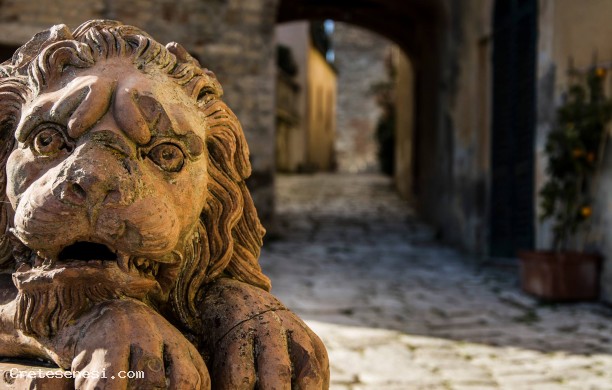
La via di accesso al borgo

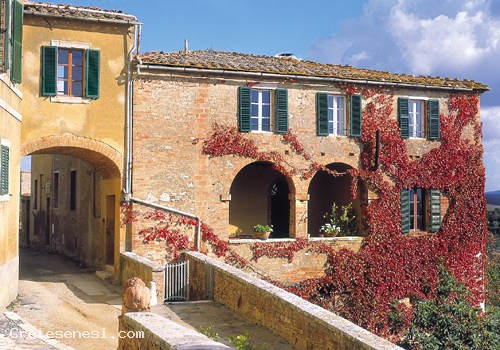
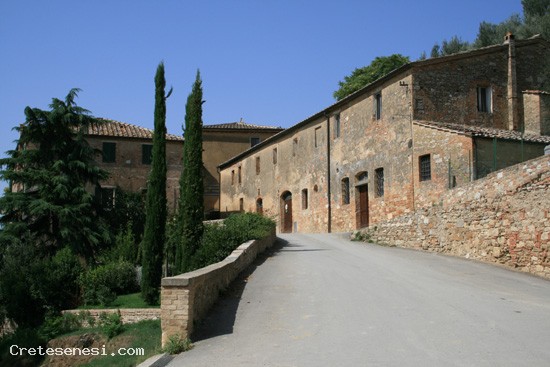
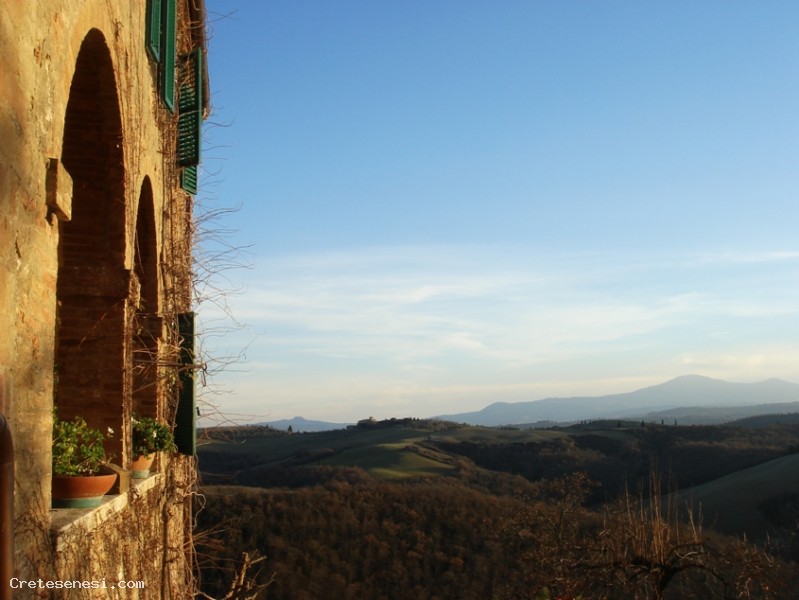
Lucignano d'Asso expresses more with the story that they capitalized documented by the annals of Big Events. The light color of its walls, a beauty calm and settlement in an extraordinary natural environment, yet wonderfully intact, speak of a thousand everyday tasks that over the centuries have shaped life in this rural corner of southern Tuscany: 'agriculture focused on quality rather than quantity, and the craft of potters, blacksmiths and stonemasons. Hidden between Crete Senesi, the pretty village shows how the past, preserved with loving respect, can live in the present and provide inspiration for the future. Staying in Lucignanello Bandini, immerse themselves in a landscape of gentle hills dotted here and there by a lone cypress, let charmed by luccichìo of olive trees by Mossi breeze means finding the inner calm that comes from contact with renewed activity whose rhythms reflect those of the mutarsi seasons.
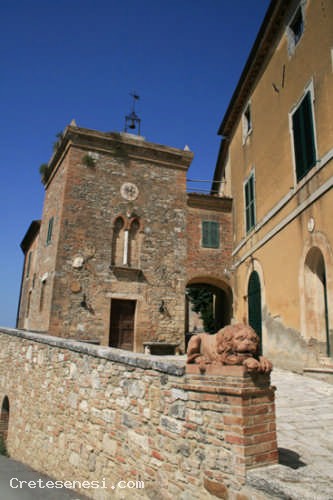
Despite its proximity to major tourist destinations Centre Italy, Lucignano of Ace has been able to preserve not only the appearance but also the atmosphere of a bygone age, often rimpianta and perhaps even idealized. The village consists of two streets and two churches, a few houses, an old shop, the residence along with the well kept garden, the old fountain. Around the ocean raised Crete, and to define the relationship between earth and sky, the imposing silhouette of Monte Amiata, the source of volcanic hot springs that flow in many places in the vicinity.
Inhabited already in Roman times, Lucignanum Longassum took its final form in the Middle Ages, joining the Siena countryside and forced it to pay an extraordinary tribute to cope with the massive debts that Siena had accollata for war against Florence. In 1318 the castle belonged to Tolomei, but a document of 1485 reveals that already in Lucignano that time was owned by "heirs of Agnolo of Nicholas of Piccolomo Piccolomini, one of the families marked with their name many stages of social history and religious of Italy.

A Lucignano a story made up of distinguished personalities immedesima you with a lifetime of simple things. The atmosphere in the village reflects the quiet warmth of those who perceive time as a continuous stream which demands respect for its potential to express harmony. This sense of balance has its own value physics, which is known in the scale of the country and landscape. Being a human is something rare. Yet in this area seems natural, as derived directly from the concept of Man Renaissance, and measurement of the heart that is living.
That the daily life in this happy is still focused on the idea that a 'harmonious environment should accompany the development of civil society understand things from small and large. A Lucignanello Bandini is already evident in the care with which the houses have been renovated and furnished. The articulation of space is due to Alberto Paolo Rossi, a professor of architectural restoration renowned for its ability to reconcile the needs of today with the heritage of the past. And the furnishing of the interior is the work of Vera Marzot, already known to the public of the opera for its theatrical costumes. In each of the five houses in the village, and nell'indipendente Sarageto House, the two specialists have created environments where space and materials that contain the wonder out of lights, colors and forms exterior: the clear tones of travertine Local, inviting the red brick, wood marked by the seasons, wall decorations tempera, rare ceramics craft, hemp, the canvas printed in vivid drawings, cotton jacquard fabric motifs.
In a broader perspective, the same respect for context and detail is equally tangible in the neighbouring countries of Montalcino and Pienza, both clearly visible from Lucignano. Last bastion of the Republic of Siena after the fall of the city in the hands of the Florentines in 1555, Montalcino keeps in his beautiful Museum exceptional series of paintings and sculptures of the Sienese school of the late Middle Ages and colleazione ceramic primitive montalcinesi of great interest. And if Montalcino bears the marks of historical importance of a period, Pienza is an expression of the ideal vision of a singular man. Enea Silvio Piccolomini, who in 1458 became Pope Pius II, and so began the transformation of his hometown in a jewel of Renaissance architecture, then called Pienza, in fact.
While in other parts of Tuscany have developed industries that have contributed to but deducted by the beauty of the landscape, Crete Senesi and neighbouring Val d'Orcia have substantially attenute to their original agricultural vocation. Today this means food of particular quality, the result of methods and procedures traditional craft that pass from generation to generation. Undoubtedly the best known of these products are Brunello di Montalcino and Vino Nobile di Montepulciano, those great red wines that accompany perfectly savory dishes created with the game that abounds in the area: pheasant, quail, rabbit, boar ... Again most popular, even abroad, are also pecorino obtained from the milk of cattle in the pastures of Pienza. In recent times, gourmets have also demonstrated a particular interest in the oil extra virgin cold from olives grown with organic methods on the hills between Lucignano, Montisi, Trequanda and Castelmuzio, where the quality of soil, air and dry slight breeze that gives breath even hotter the summer mean that the chemical treatments are completely unnecessary. The family Piccolomini Naldi Bandini is justly proud of its olive oil production, recently awarded as one of the best in Tuscany.
Rare but simple pleasures of this kind are part of the stay in Lucignanello Bandini. For many visitors, this is an experience that gives new life to painting landscapes glimpsed in the Great Masters of the fourteenth century Siena. Why what first seemed an idealized and abstract representation of nature, is also a realism almost disconcerting. Simone Martini and Lorenzetti painted what they saw: a magical landscape that has changed little today.

  Add to favorite places

PHOTOGALLERY

Panoramica sul Monte AmiataLa porta di ingresso vista da fuoriVista panoramica del BorgoIngresso al centro storico dall'interno

PROPONI CORREZIONI E/O INTEGRAZIONI SULL'ARGOMENTO

Nome e Cognome *
E-mail *
Grazie per la preziosa collaborazione