


> Home > What to visit > Surroundings

Abbazia di Sant'Antimo
CHURCHES AND MONASTERIES

PHONE NUMBERS AND TIMES
Abbazia di Sant'Antimo
Telephone Tel. + 39 0577 835659 / 835550
Website: http://www.antimo.it/
Business card (vCard)
ORARI DI APERTURA E VISITA:
Orario di visita:
10,30 – 12,30 / 15,00 – 18,30 feriali ;
9,00 – 10,30 / 15,00 – 18,00 festivi
Orario Messa:
9,15 feriale;
11,00 festivo. Canti Gregoriani.
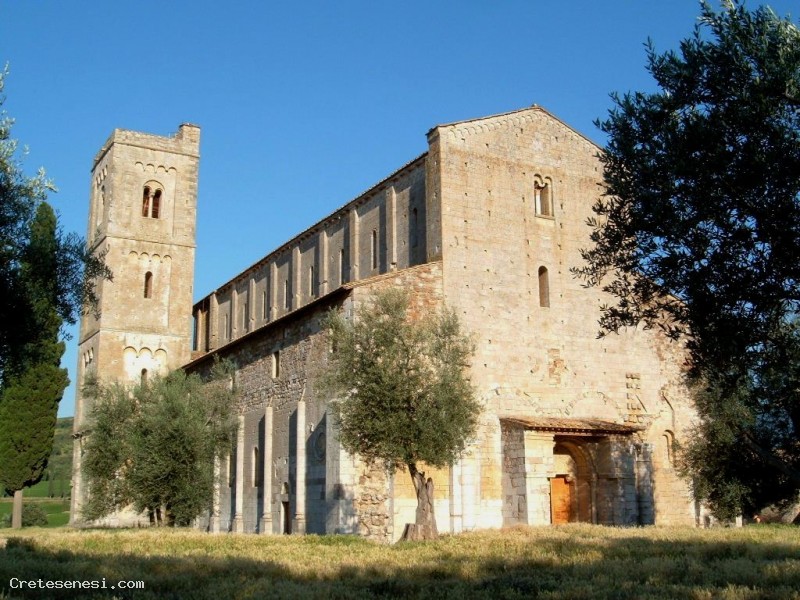
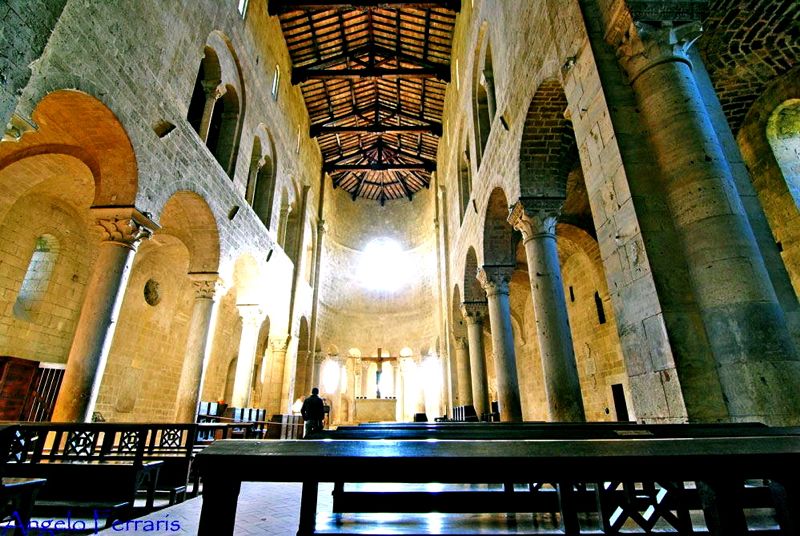
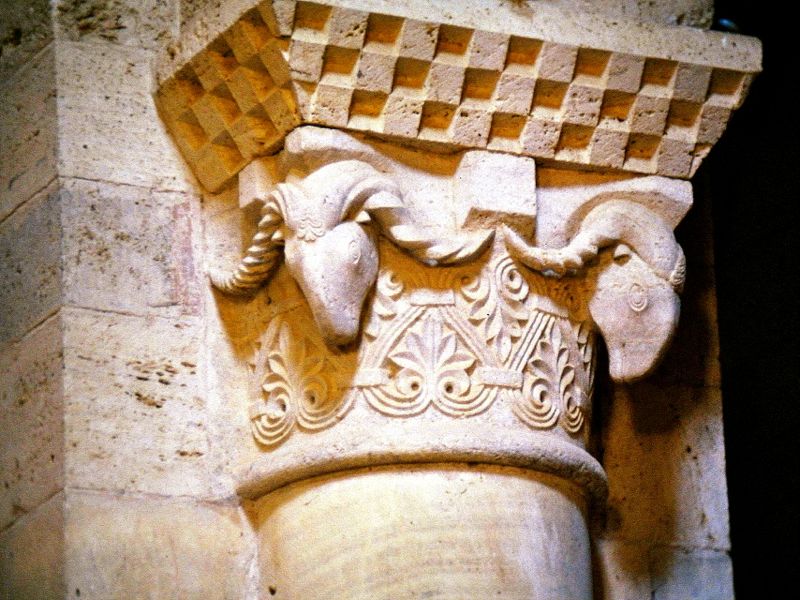
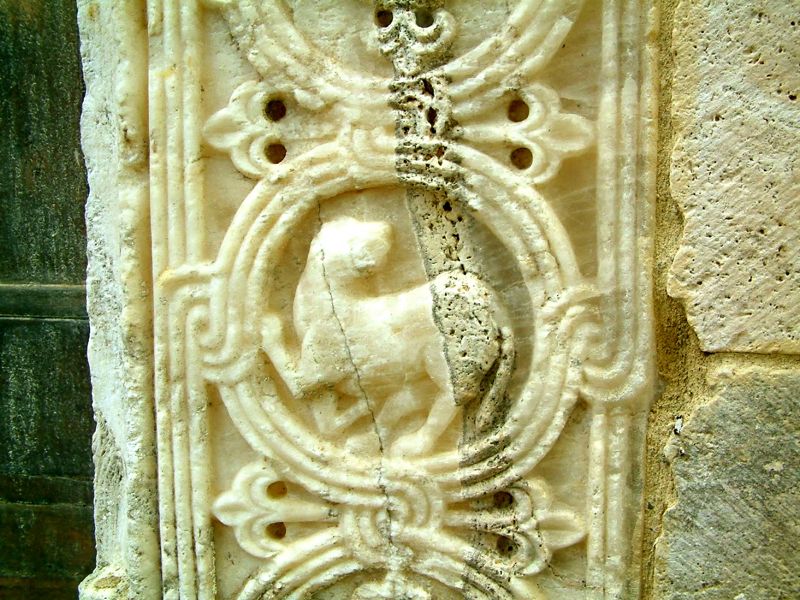
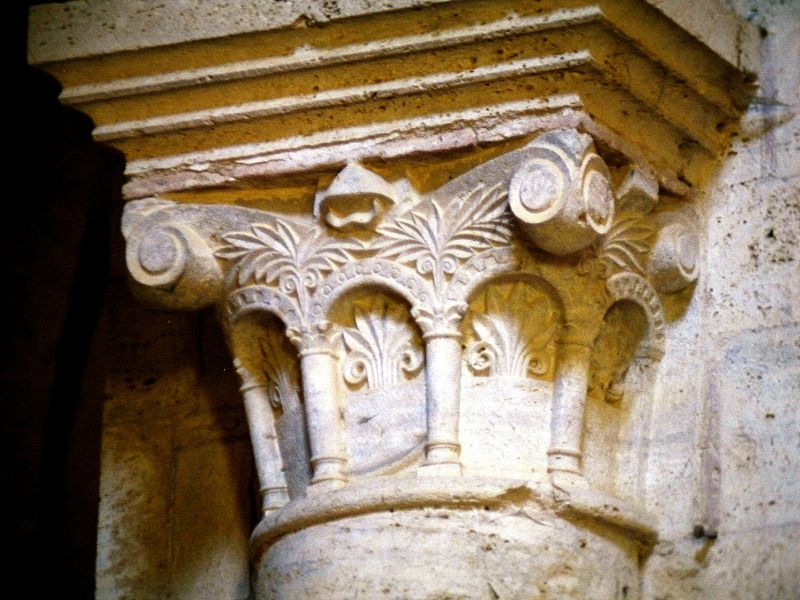
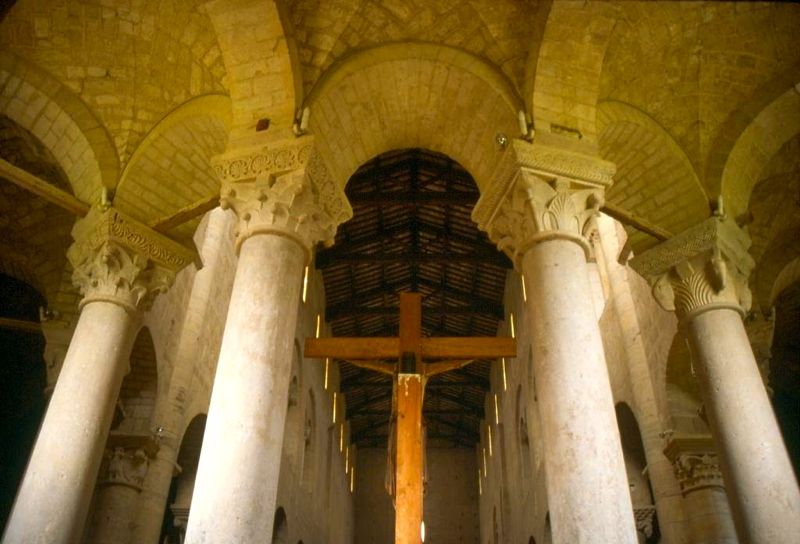
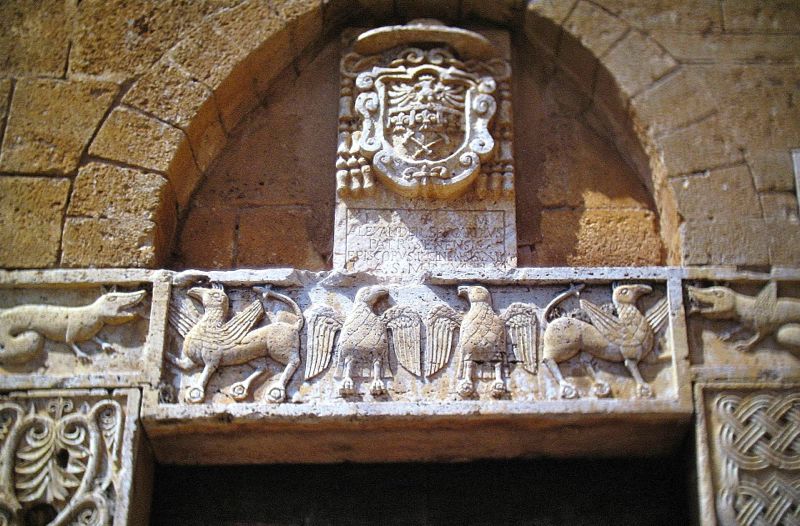
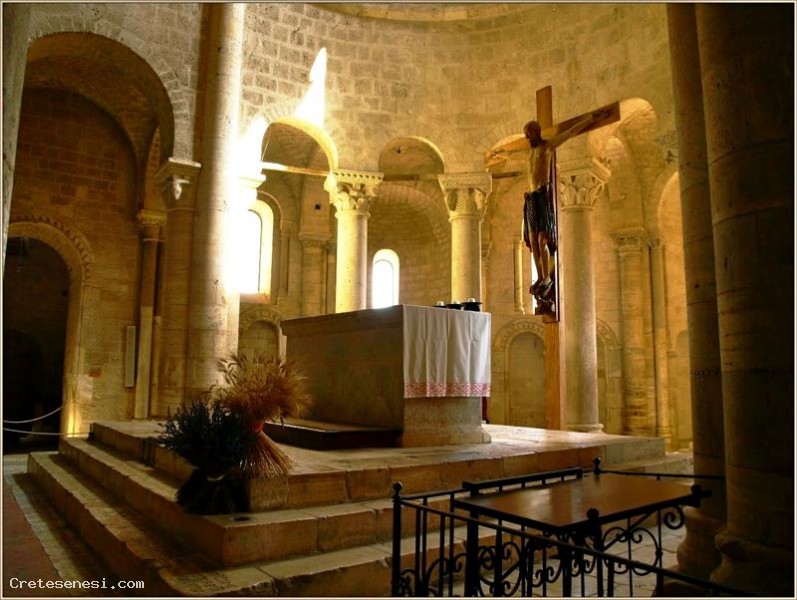
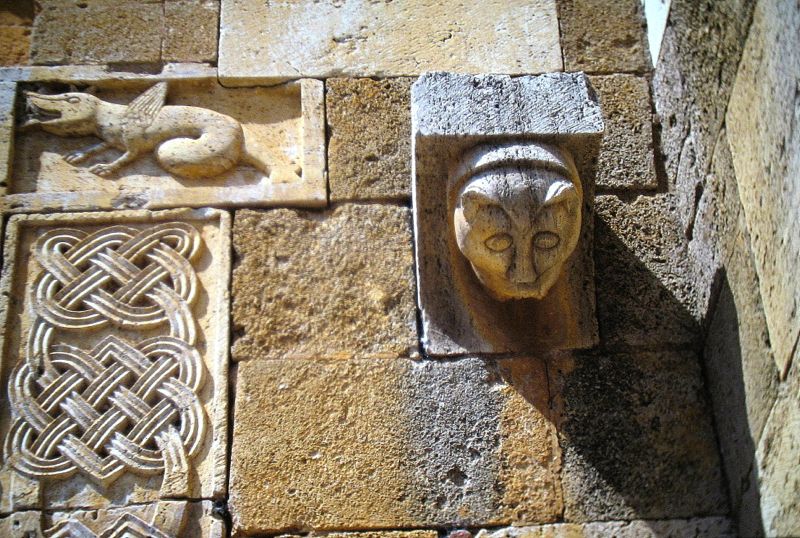
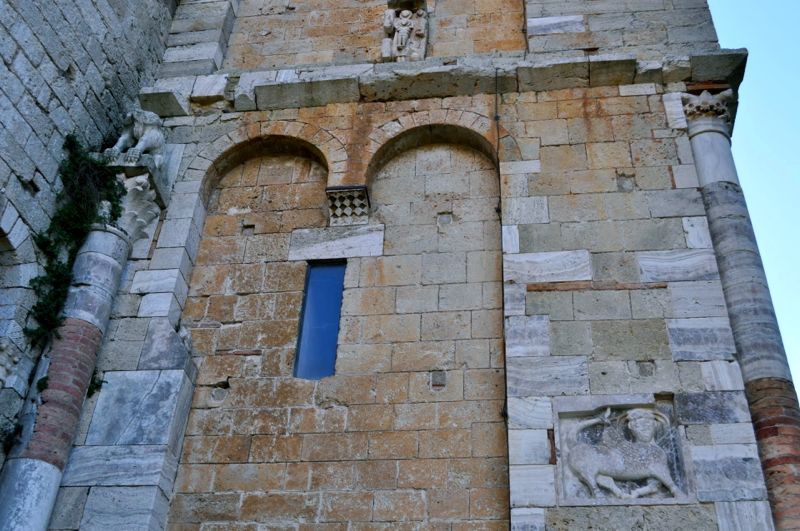
The primitive nucleus of the abbey of Sant’Antimo dates back to the cult of the relics of Sant’Antimo from Arezzo, to the death of whom, in352, in the place of his martyrdom, was built a small oratory. In the same place rose a roman villa :as it is testified by the numerous findings of the Roman period on the northern side of the bell tower or some columns in the Carolingian crypt. The inscription “venite et bibite” on the contrary would let us think about the presence of a font with therapeutic properties . In 715 the church was kept by a priest of the diocese of Chiusi. In 770 the Long bards charged the abbot from Pistoia Tao to start the building of a Benedectine monastery and they assigned him the managing of the properties of the land. The abbeys were used as a halting by the pilgrims who went to Rome , by the merchants, the soldiers and the king’s messengers. Charlemagne, coming back from Rome in 781, passing through the great road created by the Long bards and then called the “via Francigena” because it was a “road built by the Franks”, he arrived in Sant’Antimo and put his signet on the foundation of the monastery. Almost certainly the foundation made by Charlemagne has to be interpreted as a simple medieval legend. On the 29th December 814 a document by Ludovico il Pio, son and successor of Charlemagne, enriches the abbey with presents and privileges. The abbeys became to all intents and purposes an imperial abbey. Under the Carolingian influence the community started its period of climax. The abbot of Sant’Antimo was decorated with the title of Palatine Count (Count and Advisor of the Holy Roman Empire). In the examination of the imperial documents , among which there was also that of Enrico III of 1051 and the Papal ones, we count numerous lands and churches which belonged to the abbey’s jurisdiction: 96 among castles, lands, farms and mills; 85 among monasteries, churches, parishes and hospitals from Grosseto to Pistoia, through Siena and Florence. The Main property of the community was the castle of Montalcino, where the prior lived in a residence which is now into the walls of the fortress. In 1118 the Count Bernardo of the Ardengheschi left his whole legacy “in toto regno italico et in tota marca tuscie” to Ildebrando, son of Rustico, so that he transferred it into the abbey. The monastery gave then to Fortisguerra, Bernardo’s brother, 1000 pounds for the agreement to not disturb the monks anymore in their usufruct of the property. To remember the donation, this event is engraved on the steps of the main altar, as the “Lapidary Chart”. In 1118 it began the building of the new church, under the guide of the abbot Guidone. The most important reference point for the planning of the new church is the Benedictine abbey of Cluny. The abbot asked for the intervention of the French architects to plan the new building, which is partly inspired to the Benedictine church of Vignory of 1050. Some sculptures, the northern and southern doors, the jambs of the sacristy, some capitals collocated in the northern tribune, other capitals, fragments of decoration or small plasters, let us think about the existence of a building of the new abbey. Around 1000, it would have been built a church, of which it only rests the bell tower, which was originally separated by the nave, according to the medieval tradition. For this reason the following modifications of 1118 have taken into consideration the already existent architectonic ties, adopting the volumes of the presbytery so as to put it between the bell tower and the Carolingian chapel. The choir’s area in fact is smaller than the rest of the building. Around the half of the XII century the building of the new abbey is almost completed , only the front is unfinished . Montalcino, which at that time was under the jurisdiction of the abbot of Sant’Antimo, is attacked, because of its strategic position, by Siena and Florence. In fact, Siena can’t spread northwards because of Florence, its implacable enemy, and looks for new territories on the south. In July 1145 the Sieneses forced the abbot of San Salvatore to give the castle of Radicofani, along the via Francigena, to the Republic of Siena. Supporting the sienese politic, the Pope Clemente III in 1189 subdued the parish of Montalcino to the Bishop of Siena. In 1200 Filippo Malavolti, podesta of Siena, attacked Montalcino, which was partly destroyed. On the 12thJune 1212 with an agreement between the abbey of Sant’Antimo, Montalcino and Siena, it is decided that the abbey had to give a quarter of the territory of Montalcino to the sienese city. With the loss of Montalcino the abbey lost the main centre of its own jurisdiction. Siena began to injure the goods of the Benedictine community . In 1293 the monks had only a fifth of all the ancient properties between Montalcino and Seggiano. In 1291 the Pope Nicola IV ordered the union of the abbey’s community with the Guglielmiti, a reformed branch of the Benedictines. This decision wanted to give vitality again to the religious community of Sant’Antimo. From 1397 and 1404 the abbey was managed and governed by friar Bartolomeo di Simone, bishop of Cortona. On the 4th August 1439, the abbot Paolo is imprisoned for his iniquities. In 1461 in the Carolingian chapel met for the last time the chapter of the Guglielmitis. Pio II, in the world Enea Silvio Piccolomini, abolished in 1462 the abbey, giving its goods to the bishop Cinunghi, ordinary of the new diocese of Montalcino-Pienza, created on the 3th August. Pio II wanted to turn his native village, Corsignano, into a Renaissance town Pienza, giving to it its bishop , his nephew, with a territory and a dominion. In 1870 the abbey of Sant’Antimo was inhabited by a sharecropper who lived in the bishop’s apartment, used the Carolingian crypt as a cellar, the church as an agricultural store and the cloister for the animals. In 1870 the abbey passed under the jurisdiction of the Fine Arts. With seven restorations the abbey has come to the present state . The first two, from 1872 and 1873 and in 1876 eliminated everything that had changed the original structure and it was opened the big mullioned window with two lights which now enlightens the church. In 1970-1973 in the same period in which in Sant’Antimo were made some scenes of the film “Brother Sun and Sister Moon” by Zeffirelli, the Fine Arts of Siena remade completely the roof of the church , changing almost all the wooden parts of the truss.
STAY NEARBY
PODERE OLIVELLO
SAN GIOVANNI D'ASSO
“Olivello” is a typical farmhouse of the country culture which has left the an...PODERE OLIVELLO
SAN GIOVANNI D'ASSO
“Olivello” is a typical farmhouse of the country culture which has left the an...Agriturismo Il Bosco
SAN GIOVANNI D'ASSO
“ Bosco” is an ancient Tuscan farmhouse, dipped into the picturesque landscape...DINING & ENTERTAINMENT NEARBY
TNT PUB PIZZERIA RISTORANTE BIRRERIA
BUONCONVENTO
SERATE IN ALLEGRIA E OTTIMA CUCINA Da Buonconvento si vede la collina di Bibbiano e qui, ...LA PRIMAVERA di Enza di Buono
BUONCONVENTO
GOLOSE DELIZIE NELLA CITTA' DI BUONCONVENTO Condotto dalle simpatiche sorelle Di Buono in...Ristorante I Poggioli
BUONCONVENTO
...