


> Home > What to visit > Castles

Grancia di Cuna Monteroni d'Arbia
CASTLES
PHONE NUMBERS AND TIMES
Grancia di Cuna
Business card (vCard)
.jpeg)
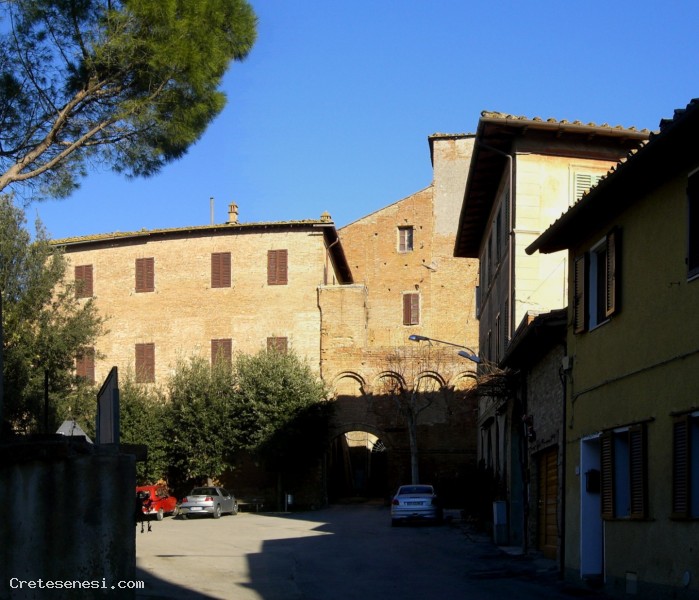
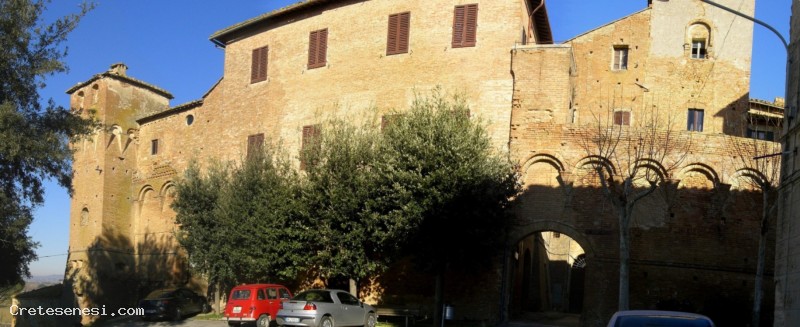
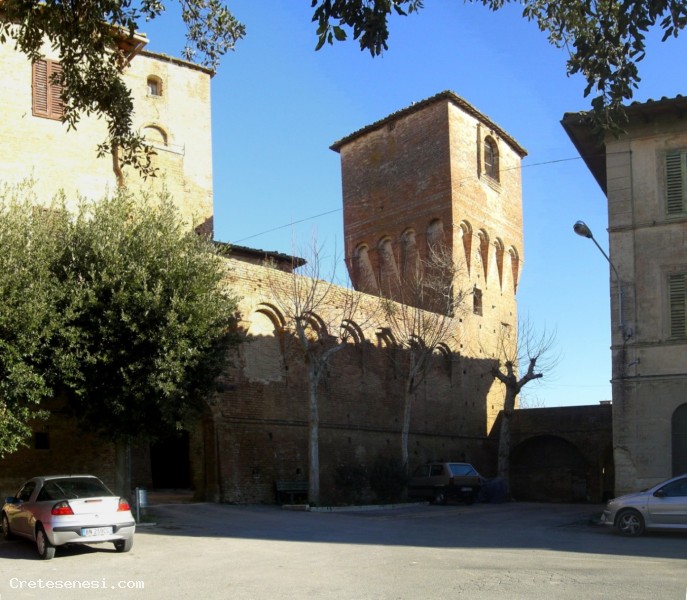
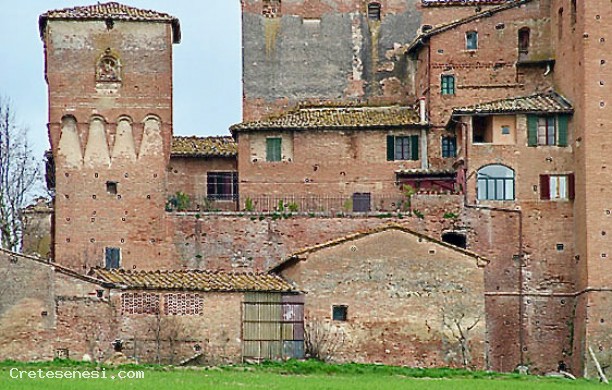
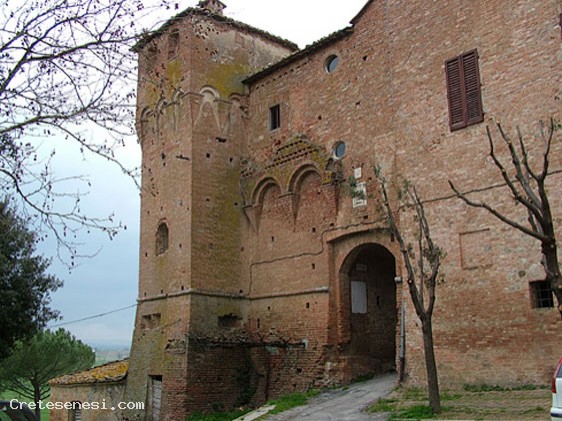
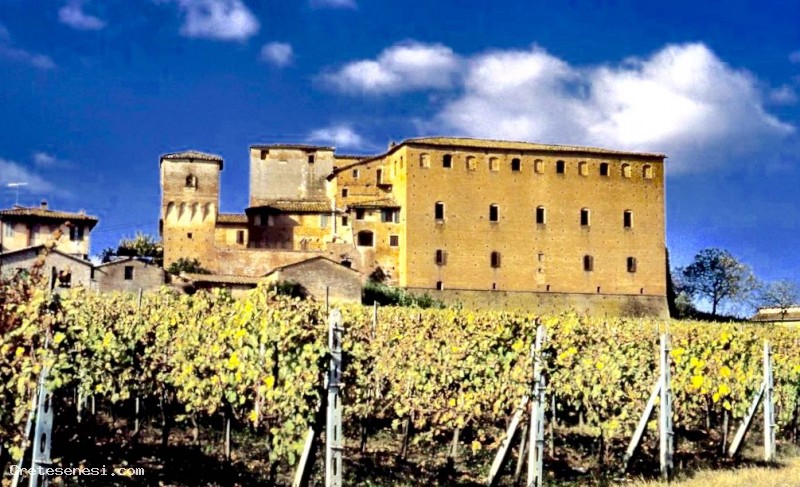
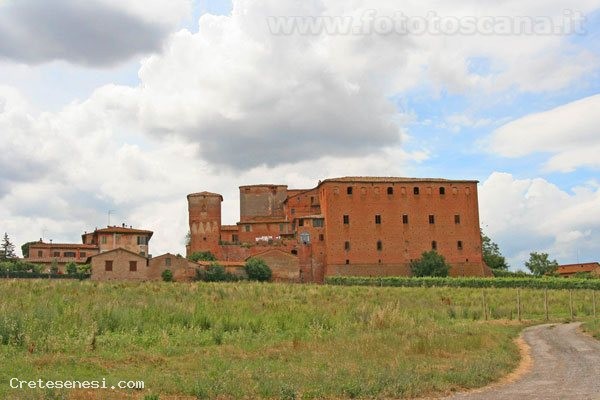
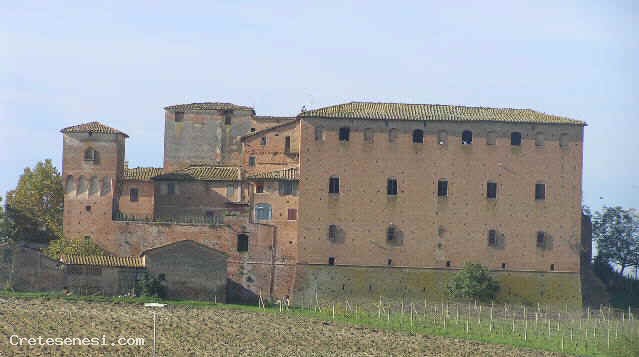
The mighty red brick mass of the Grancia di Cuna makes the complex of buildings easily identifiable. This Grancia is still today the best preserved among the medieval fortified farms, as well as being one of the most interesting architectural complexes of the Sienese countryside and of the whole of Tuscany.
As early as the 12th century there was a 'Spedale' dedicated to welcoming and giving assistance to pilgrims and merchants in transit along the Via Francigena which, near the Grancia, crossed the Arbia river with a ford. From a document of Pope Eugene III, it appears that the fortified complex was a possession of the Abbey of Torri.
The entire territory in which the Grancia is located became the property of the Republic of Siena, already during the 13th century, but the farm located on the hill of Cuna and Castelluccio was donated to the Hospital of Santa Maria della Scala, one of the more powerful than time.
The rector of the hospital: Ristoro Menghi di Giusto, immediately decided to expand the existing building. Since then, the Grancia developed to become a small independent village surrounded by walls and the farm-fortress in the center.
His successor, probably Giovanni de 'Tolomei, began the construction of the new granary and the restructuring of the church dedicated to Saints Giacomo and Cristoforo in 1314.
In the 14th century, due to strong political and military instability, the Spedale was forced to strengthen its defensive structures in order to safeguard the reserves of cereals and wheat.
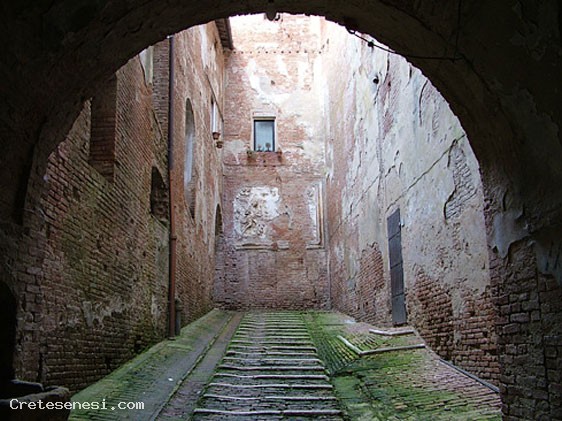
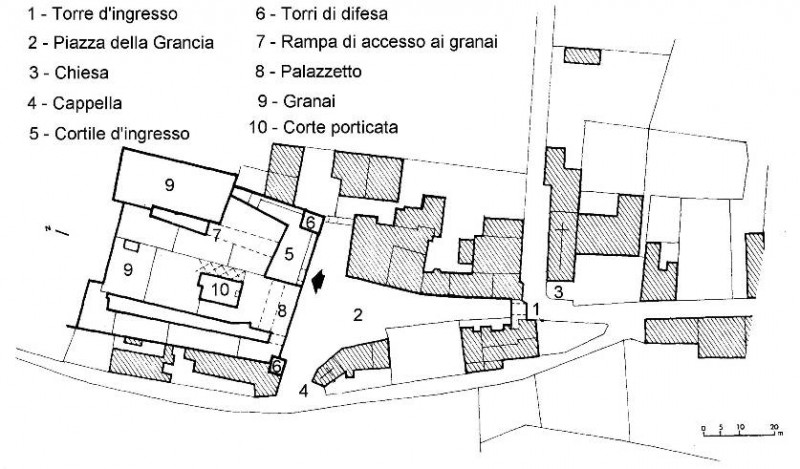
The Cuna complex consists of a large square block with scarp walls, two corner towers equipped with a defensive apparatus protruding on the southern front. The main entrance leads into an 'L' -shaped courtyard from which you enter the premises and internal warehouses thanks to a ramp, which can also be used by beasts of burden up to the higher floors.
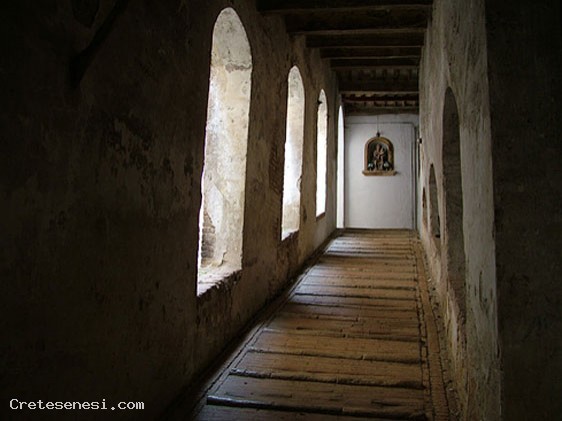
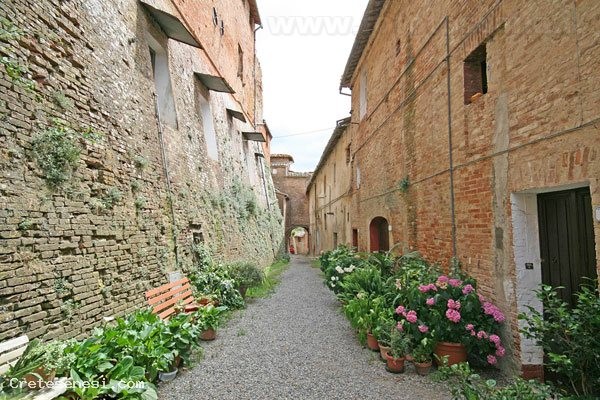
This was the real farm-fortress surrounded by the first walls of the 14th century with most of the patrol walkway, loopholes and galleries still visible. A second, wider ring surrounds the farm and the village born around it. The main door of this circle still remains intact.
Cuna was sacked only in 1554, during the last war of Siena, by the Austrian and Hispanic troops, allied with the Florentines. During the second half of the 16th century a new roof was added to the farm and to the towers which covered the pre-existing battlements. Furthermore, the manor house, between the two walls, was only built in the 17th century.
Among the characters who, in different eras, were hosted in the Grancia, we remember: in 1386 to Urban VI, in 1420 Martin V, in 1451 Paul III. Furthermore, in 1640, Charles of Guise of the Lorraine family died there.
EXPLANATORY NOTE
La Grancia was a fortified farm developed on the place where, in the Middle Ages, a hospice or hospital for the reception of travelers must have been. Located in the countryside, in the middle of the large landed properties that the Spedale owned, it was the center for the collection of grain and all the agricultural production necessary for the maintenance of the hospital. Its fortification, which served to safeguard it from incursions, represented an interesting architectural typology and a sure point of reference for those who took refuge there in case of difficulty.
STAY NEARBY
MORE DI CUNA
MONTERONI D'ARBIA
History, nature, eno-gastronomic tradition, in short the Tuscan wonders, summarized in an ...CAGGIOLE DI RADI
MONTERONI D'ARBIA
The farmhouse is situated on a hill from which you can enjoy a beautiful view of Siena. It...SAN FABIANO
MONTERONI D'ARBIA
You come here as guests and you leave again as friends. Filippo and Rachele Fiorentini inv...DINING & ENTERTAINMENT NEARBY
Bar Le More
MONTERONI D'ARBIA
Il Bar LE MORE si trova lungo la via Cassia in località More di Cuna. Mauro Chel...Pizzeria Bar Peter Pan di Alessia Vegni
MONTERONI D'ARBIA
Un posto speciale dove il forno è sempre caldo per sfornare pizze profumate e di ot...SuperCinema
MONTERONI D'ARBIA
Opened Friday, June 11, 2010 the Supercinema is located in Via San Giusto in a local purch...